“We need to free each other’s hearts.”
Eddington is the latest film from A24 royalty Ari Aster. His films Hereditary and Midsommar helped turn the indie film studio into a household name (well, in the houses of cinephiles anyway). He was also a key player in the ‘elevated horror‘ genre of the last few years – a term which is a load of crap but is a shortcut to saying horror which is more ‘artistic’ than mainstream slasher fare – and chock full of phycological meaning. Anyone with even a passing awareness of horror cinema will tell you this has always been around (The Shining being a key example).
But what ever you think of the ‘elevated-horror’ term and genre, Aster was at the forefront of it. Arguably making movies even more ‘elevated’ (whatever that means) than his compatriots, Jordan Peele and Robert Eggers. Well, after the traumatic phycological torment of Beau is Afraid, Aster has taking an even wider swing away from his horror wheelhouse – into the realm of the neo-Western.
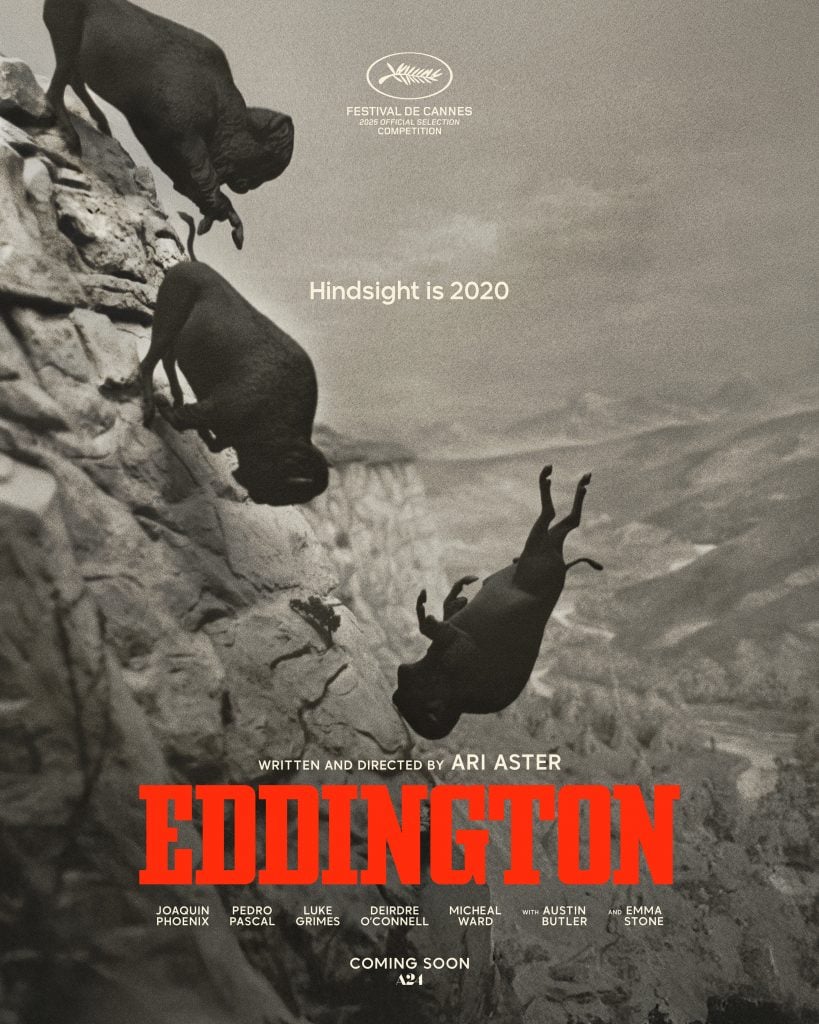
Eddington follows small time mayoral wannabe Joe Cross (Joaquin Phoenix) battling COVID mandates and the town’s woke mayor, Ted Garcia (Pedro Pascal) while his wife (Emma Stone) slowly descends into the QANON right wing pipeline, following her batshit mother (Deirdre O’Connell) who lives with Joe and his wife in their small bungalow. Also Austin Butler shows up briefly doing his Elvis thing. The film takes leaps that don’t always work, but make it one of the boldest films to be released in recent years. And it contains elements that are some of Aster’s very best work. It’s very funny in places, and the cast are clearly having a ball, working with some real pitch-black humour.
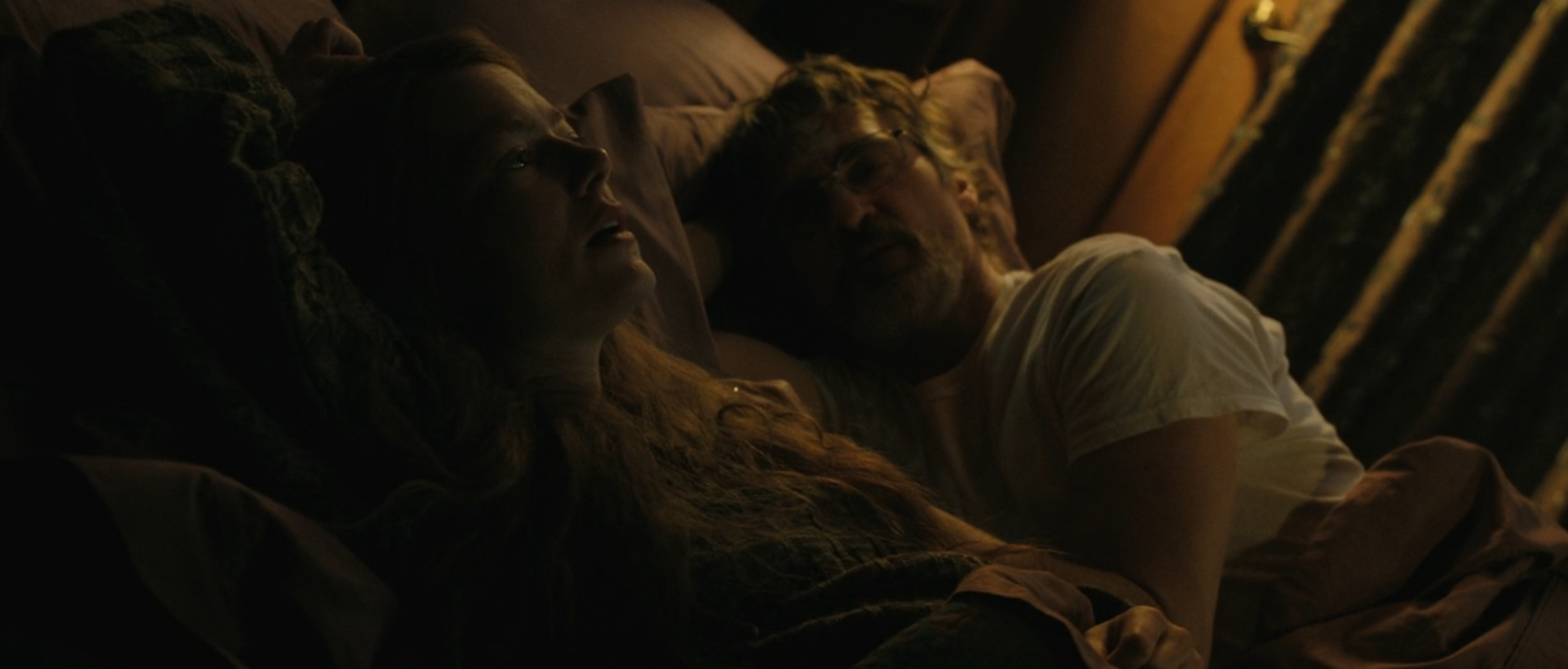
Eddington appears at first to be the odd one out in Aster’s filmography. And the film is light on the horror of the kind where Aster made his name. But the slow building dread that typified Hereditary and Midsommar is on full force in Eddington. The COVID pandemic is the perfect setting to facilitate this sense of unease – from the masks hiding everyone’s true emotions, to the town’s barren streets, to most conversations taking place 6 feet apart. When Ted finally closes the gap and slaps Joe, it hits so much harder. The use of such recent history as a backdrop may cause some disapproval amongst audiences, but it isn’t done for shock factor, it’s the perfect setting for building tension up to the explosive third act.
Judging from the trailer, you may think Eddington is a centrist take on the extreme politics that have come to define the last 5 or so years. But while it’s clear Aster has his issues with the left – the artifice of the young (white) BLM protester just trying to get laid who quickly becomes a right wing grifter the moment he gets famous, is one example. But while the left may come off as naïve and inauthentic, Aster really takes the right wingers to task. The characters aligned with the typical right-wing beliefs; racist, homophobic, pro-gun, anti-mask – are not good people. And that includes Phoenix’s protagonist, Sherriff Joe Cross, who is definitely not a good person.

Joe is a pathetic and complex man. He does argue with some of his mother-in-law’s more crazy conspiracy therories, but as soon as he is running for Mayor against the woke Ted Garcia, he throws in with the QANON lot. In one of the film’s best sight gags, Joe’s campaign truck / police cruiser is kitted out with Bill Gates conspiracy theories – complete with grammatical errors (“your being controlled”). Phoenix’s portrayal of Joe is phenomenal. Joe is poorly educated and even more poorly informed on current affairs. His information on the world is gained exclusively through late night doom scrolling. Phoenix’s subdued demeanour works better here (and grates less) than his portrayal of Arthur Fleck in the Joker films.
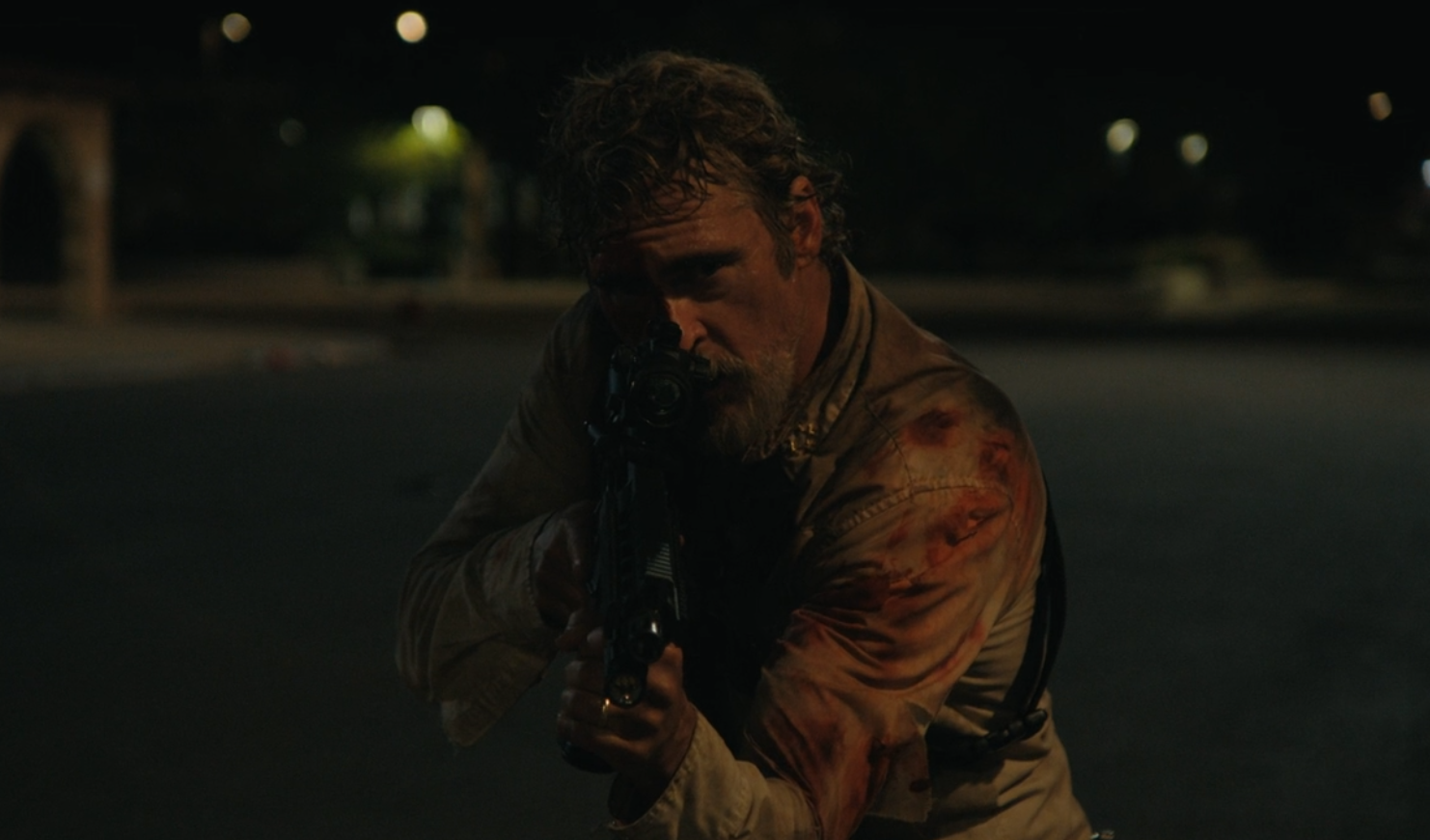
Beau is Afraid and Midsommar were Aster at his most self-indulgent, particularly if you were subjected to the near 3-hour director’s cut of Midsommar. But Eddington, while carrying a similarly bloated run time of 2 and a half hours, doesn’t feel nearly as excessive as those films. There’s a valid argument that Emma Stone and Austin Butler’s characters could be chopped from the narrative with little to no impact. But these small and inconsequential add much needed depth and flavour to the world of Eddington. All the characters represent a different reaction to the batshit crazy world of the last 5 years. Specifically, the dangers of social media on the world’s population.
Take Joe for example, who spends his nights in bed doom scrolling through brain rot content and memes and violent video camera footage. It’s no surprise to him when the ANTIFA super-soldiers appear in the films wild third act; they are practically willed into existence through Joe’s FYP. Emma Stone’s Louise, Joe’s wife, is spending the pandemic fending off her crazy mother’s internet-borne, conspiracy theories, whilst also becoming increasingly taken in by Austin Butler’s cult leader Vernon Jefferson Peak, who holds similarly crazy beliefs to her mother, via his online message boards and videos.
Eddington takes some wild swings and mostly succeeds. The film is confidently made and absolutely gorgeous to look at, invoking some beautiful Western imagery and using the American South West location to full effect (the film is lensed by the brilliant Darius Khondji). The use of recent history (the pandemic) as a backdrop may turn some people off but if you go with it, you’ll see it as the perfect setting for Aster to explore his depressing take on the state of the world and the rotting effect social media has had on us. It’s also really funny. There is a fantastic scene where Joe and Ted finally have a physical confrontation and it’s soundtracked by a unsettlingly loud version of Katy Perry’s sickening self-empowerment ballad, ‘Firework’. The film seems to be polarising both professional critics and ordinary viewers – and that is perhaps the most fitting outcome for Aster’s COVID Neo-Western polemic.
Eddington is in cinemas now.
Reviewed by Tom


 MyCreativeRamblings