“He felt, at last, connected to it all.“
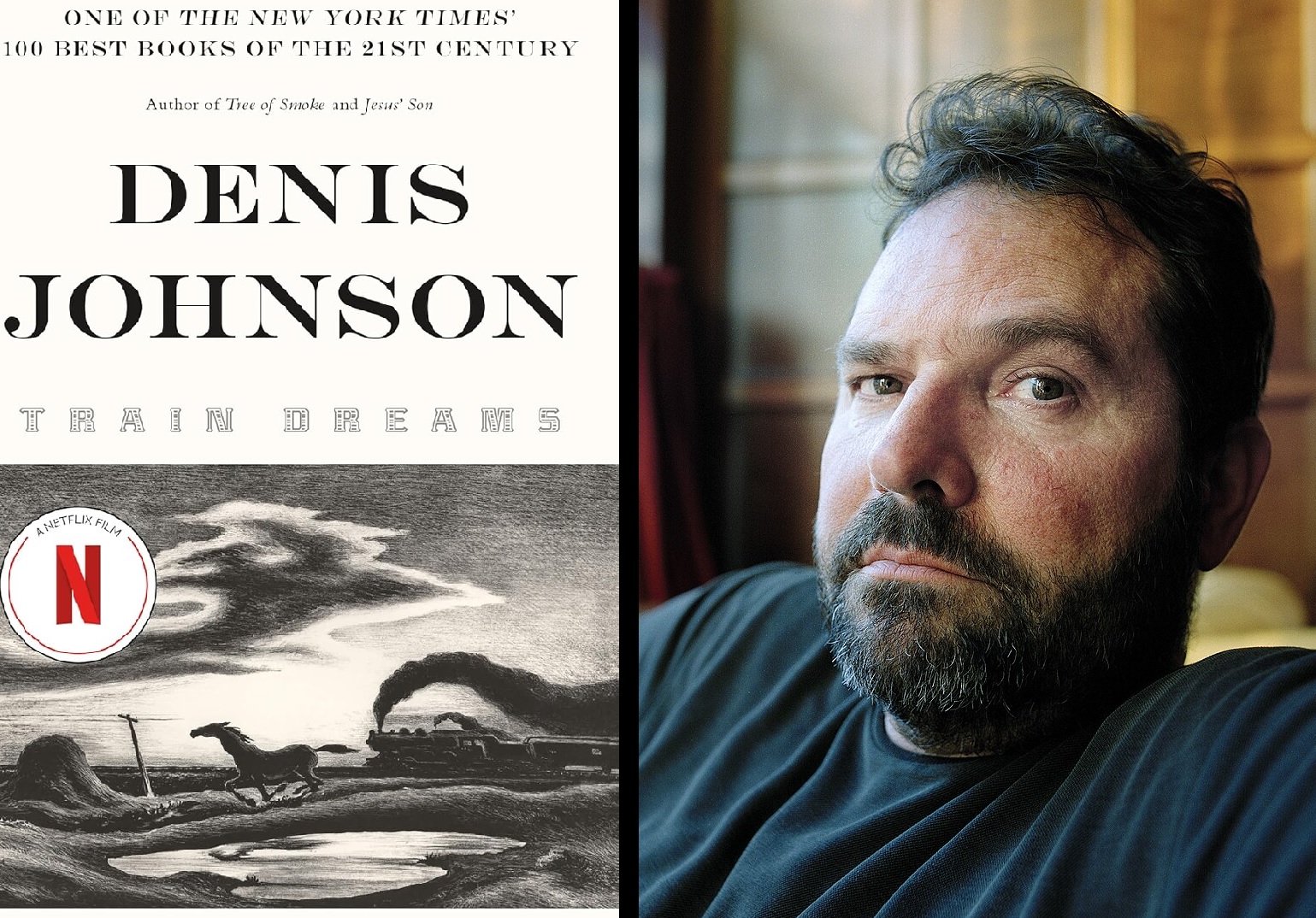
Denis Johnson’s 2011 novella Train Dreams is a quietly epic and occasionally surreal story of the life of Robert Grainier, a self-described hermit who works on the American railroads around the turn of the 20th century. It was a beautiful and powerful piece of Americana and I absolutely loved it. So I was intrigued, and admittedly a bit worried, when I read it was being adapted for film. On one hand, Joel Edgerton was involved, one of the most underrated actors of his generation. As was director Clint Bentley, co-writer of last years acclaimed Sing-Sing. But how could a film do justice to the story which, despite being only roughly 100 pages long, managed to encapsulate an entire life; an entire existence, within it’s pages? Plus, the film was being distributed by Netflix, never the best sign. Thankfully, the film manages to mostly live up to the high bar set by Johnson’s phenomenal novella and in some ways, even surpasses it.
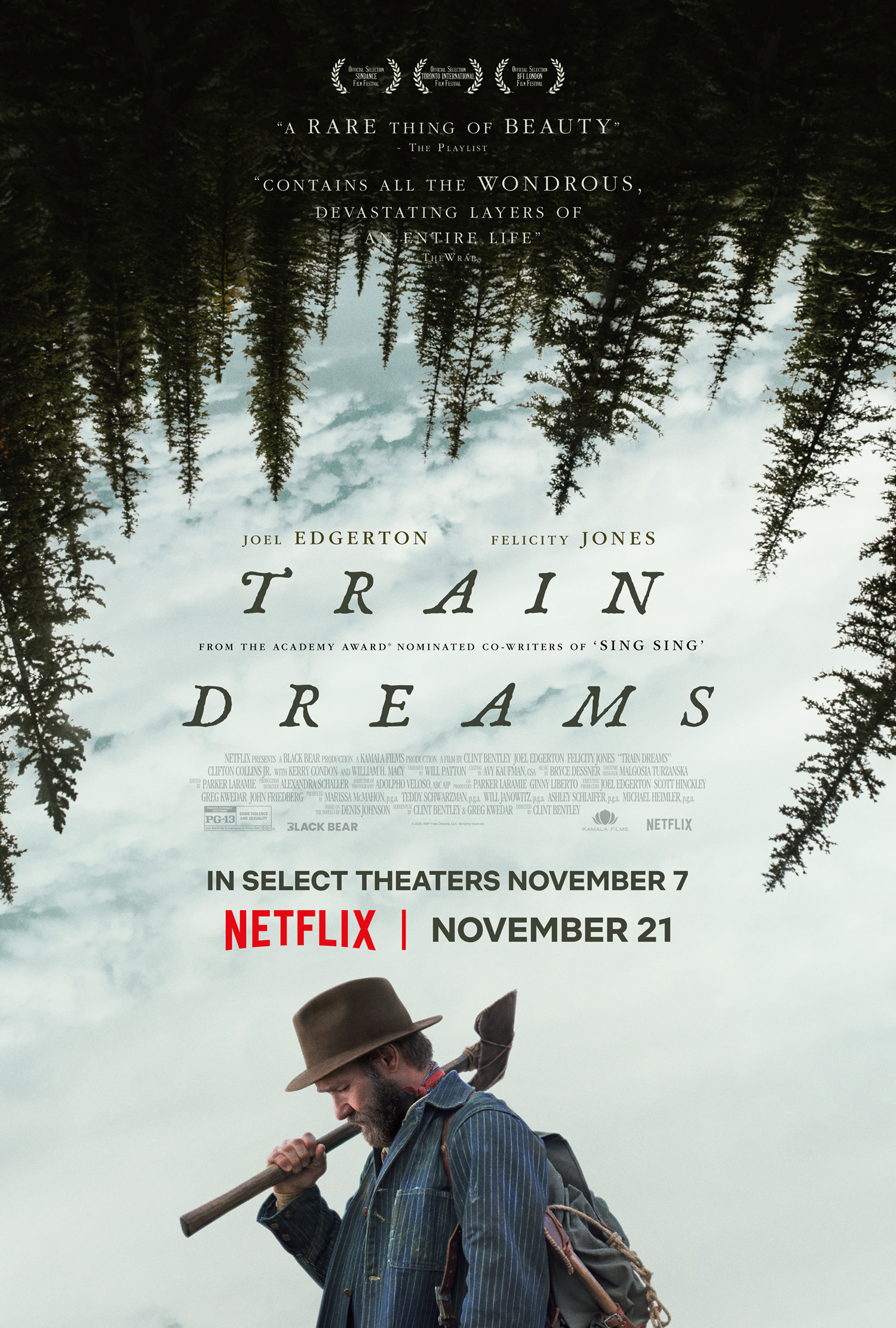
Edgerton delivers undoubtedly the best performance of his career as Robert Grainier, a logger whose eight decades of life, living along the Moyie River, is the center point of the film. Grainier is a man of few words and Edgerton perfectly embodies Robert’s turn of the century stoicism; more often than not communicating Grainier’s thoughts and feelings with his face and expressions. The weight of his experiences throughout the decades are reflected in his face, his posture. It’s a powerful performance, and by the end of the film, you feel as if you lived that life with Grainier. The make up helps sell the passing of time but it’s Edgerton’s performance that really sells the passage of time. There are some small but wildly impactful supporting performance too; namely Felicity Jones as Robert’s wife Gladys and William H. Macy as elderly logger Arn Peeples. Jones has such natural chemistry with Edgerton that when tragedy strikes around the halfway point, you really feel Grainier’s heartbreak. And Macy almost steals the entire thing with his brief appearance, offering some further rumination on the beauty and cruelty of life. That’s the dichotomy at the heart of the Train Dreams really, but the film doesn’t sermonise at you. Like Johnson’s novella, the film is more interested in making the audience feel, rather than telling you what to think.
Compared with the book, Bentley’s film adaptation of Train Dreams opts for a more linear structure, tracing Robert’s life from orphaned boy to happily married family man to solitary old hermit. Whereas Johnson’s acclaimed novella drifts more freely through Grainier’s life. The film also mostly does away with some of the more surreal aspects of the source material. These changes are mostly successful, making the adaptation accessible without sacrificing the haunting, dreamlike quality of the original story.
Throughout Train Dreams, Bentley and co-writer Greg Kwedar remain faithful to Johnson’s elegiac tone in the novella but do make deliberate changes, I believe, to deepen Robert’s humanity. I admit I missed some of the more surreal touches of the book. The wolf-girl for example, is a lot less fantastical in the film. Johnson’s surreal wolf-girl vision of Robert’s daughter becomes a more grounded, tender apparition in the film. These changes really benefit Edgerton’s portrayal of Grainier, who is a more sympathetic figure in the film adaptation.
Another positive change; in the original story, Grainier actively participates in a brutal attack on a Chinese laborer; in the film, he witnesses it but does nothing to stop it. In the story the laborer escapes, whereas he dies in the film. Prior to the attack Grainier states he see’s these men he works with as ‘family’. It’s a seemingly subtle shift that preserves (and even emphasises) Grainer’s moral ambiguity while softening his culpability and giving him more humanity. Honestly, Train Dreams is a great example of adaptation done right.
“I don’t know where the years go, Arn.”
“Well if you figure it out, let me know. I’d like to ask for a few back.”
There is more than a touch of the work of Terrence Mallik in the composition of the film; particularly in the magic hour shots and the meditative voice-over (a wonderful Will Patton, who also reads the audiobook). But Bentley and Kwedar’s voices are distinctively their own. The 1:1 aspect ratio is wonderfully utilised to paint this intimate portrayal of a life, while not deminishing the beauty of the American landscape. I also think the use of this aspect ration lends the film a timeless quality. If you knew nothing about the actors, you could think this film was made anytime over the last half a century. Although I think had a this film been made in the 70s (a decade full of wonderful American stories like this) there would have been a mean streak running through Grainier, with maybe a Gene Hackman type actor playing him. But while Edgerton’s Grainier is stoic and rough, he is a kind soul full of humanity. And the film hits so much harder because of this.
Train Dreams covers a lot of ground, but does so at a reflective, even meditative pace. While the slow pace may challenge some viewers (especially those who stumble across it on Netflix, I imagine after finishing some bargain-basement slop TV show) the narrative remains strong. This is Robert Grainer’s life. Beginning to end. The film is also incredibly devastating. I challenge anyone to not well-up at the devastation wrought by the forest fire, or in the film’s final moments. An airborne scene from the middle of the novella is used at the films climax, as Robert reflects on his life and the film reaches a level of emotional transcendence so rarely seen in films today.

Train Dreams is a profound and incredibly moving portrait of a full life, lived quietly on the edge of civilization and when it’s all over, there is no sense of sense of deep sadness. Sure, we follow a man through his life, through some of the worst things that can happen to a person, all the way to his death. But instead of melancholy, rather I found the film left me with a sense of fulfillment, of spiritual enrichment. It’s a whole full life reflected back at the audience and will make anyone, even the most hardened cynics, see the beauty in life and in the world. It’s a wonderful, beautiful film and deserving of all the awards in the next award season. See it on a big screen if possible, I regret that I didn’t, but just see it in anyway you can. There’s a good chance it will change your life.
Watch Train Dreams on Netflix here
Reviewed by Tom


 MyCreativeRamblings