Over 49 episodes, Reece Shearsmith and Steve Pemberton have made the definitive anthology show. One episode might be the scariest thing you’ve ever seen, the next might be kitchen sink drama, and the next might see a flatulent and German Steve Pemberton evacuating his bowels into a shoebox. Which makes ranking them difficult.
The show has a few constants. Every episode takes place in one setting—be that a room, house, car, caravan, train carriage, etc.—marked by the number ‘9’. Pemberton and/or Shearsmith always have a role too, except for a few exceptions. Apart from that, the episode can be absolutely anything.
Every episode of Inside No. 9 has something to offer and I can’t think of one that I wouldn’t rewatch in an instant. But, below, I’ve tried my best to pick what I think are the nine absolute best episodes.
9. Dead Line
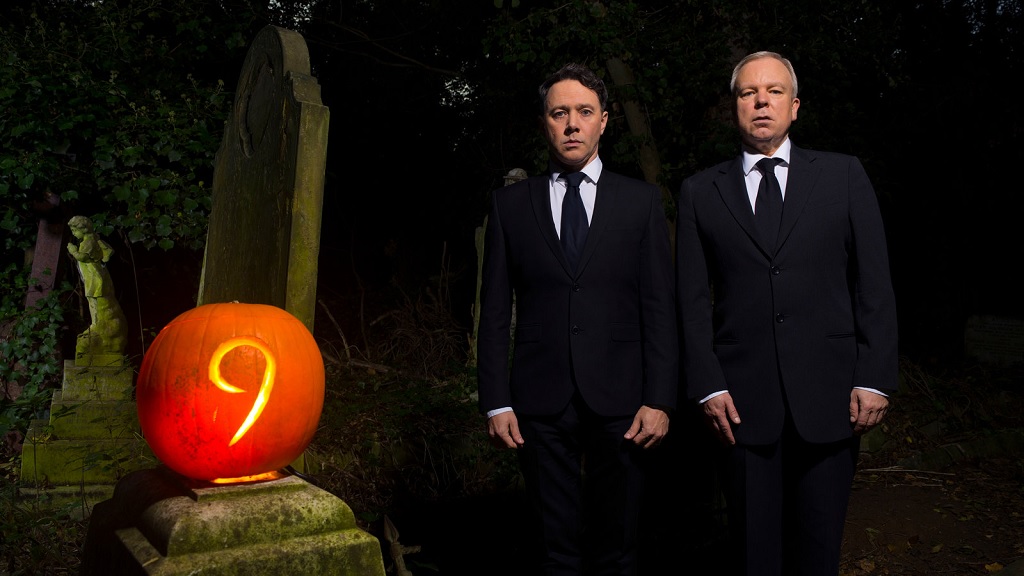
Based on similar television mockumentaries that were played completely straight, like 1992’s Ghostwatch, this live episode of the show was a pretty big risk. The central conceit of the episode was that a live episode of Inside No. 9 went wrong, leading to stars Reece Shearsmith and Steve Pemberton breaking character and commenting on it. The BBC voiceover woman (who introduces programs) was even in on it. The problem is that as soon as things go wrong, and the BBC error message appears on screen, a portion of the audience is bound to switch off.
But if you stick with it, you’re going to be seriously freaked out. The “BBC” decides to play an old episode of Inside No. 9 to replace the failed live show, and begins showing the excellent “A Quiet Night In” from series one. The episode begins as normal, with the same footage of Denis Lawson going about his routine. The difference now is that there’s a horrible ghose hidden in the background. It’s like the bit in Hereditary with Toni Collette on the ceiling and once you notice it, it has the same unnerving effect.
From there the episode is interspersed with real footage of an episode of Most Haunted filmed in the same Granada Studios, as well as fictional reports about a dead Coronation Street crew member that haunts the studio, alongside hidden footage of Shearsmith and Pemberton bemoaning the failure of the live episode, before they too are bumped off. It’s an incredible mix of the real and fictional, making me feel truly sorry for any poor pensioner who swapped to BBC One mid-broadcast.
Live episodes can be a bit tacky, but this is anything but. I just wish I’d caught it when it aired.
8. The Bones of Saint Nicholas

What can I say? I love a Christmas episode, especially a spooky one (something that will become glaringly apparent further down this list). This episode follows a dour, crotchety, recently widowed gentleman named Dr Parkway (Pemberton) who has decided to go ‘Champing’, or church camping, on Christmas Eve. He’s assured he’ll be alone but is soon interrupted by two fellow campers (Shobna Gulati and Reece Shearsmith).
What I really like about this episode is the way it twists the usual ghost story tropes on their head. It begins cozily, as Pemberton is shown around by churchwarden Dick (a very game Simon Callow) who tells them all the scary tale of a jawless spirit of St Nick, who is said to haunt the rafters of the old church. It’s a classic red herring, forcing you to view something one way before Pemberton and Shearsmith pull the rug out. There’s something a lot sadder at the center of this tale than a scary ghost, with the two visitors hiding a heartbreaking backstory and Parkway becoming undone by his obsession.
Like The Haunting of Hill House and its Bent-Neck Lady, the “ghost” of this tale operates on a completely different temporal plane. It’s a gut punch of a twist in an exceptionally well-made episode. It was the middle of July when I watched it, but even I could feel the winter wind gathering at the windows.
7. The Harrowing
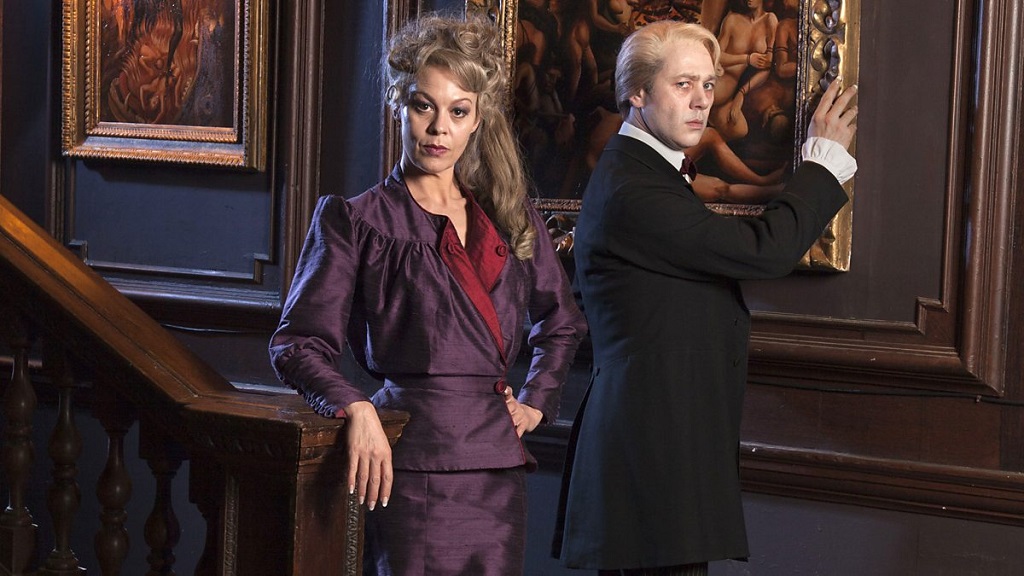
The final episode of the series’ first run of six stories, “The Harrowing” is Shearsmith and Pemberton’s love letter to Hammer horror. Featuring a host of fantastic performances—namely the late and always-excellent Helen McCrory and fellow Peaky Blinders alum Aimee-Ffion Edwards—and a wonderfully creepy atmosphere, “The Harrowing” established just what Inside No. 9 was. Over its previous five episodes, it had covered comedy and drama, with a number of creepy moments. But this is where they went all out into horror territory, all the time retaining the jet-black humor.
The concept is simple. Katy (Edwards) is hired to look after an old gothic house for a strange pair (Shearsmith and McCrory). Inside, the walls are filled with grotesque depictions of hell and the temperature is kept close to freezing for the pair’s extremely disabled brother, Andras. Katy is told in no uncertain terms to not disturb Andras. Of course, things are not quite that simple.
We soon meet this creature at the top of the stairs and things quickly become very nasty and macabre, as the episode barrels to a wonderfully bleak ending. The icing on the cake is the way the episode utilizes the Dubliners’ song “Lord of the Dance”, to great effect. It seems that a few critics were not fans of the shift into grotesque horror, but I loved every second.
6. The Devil of Christmas
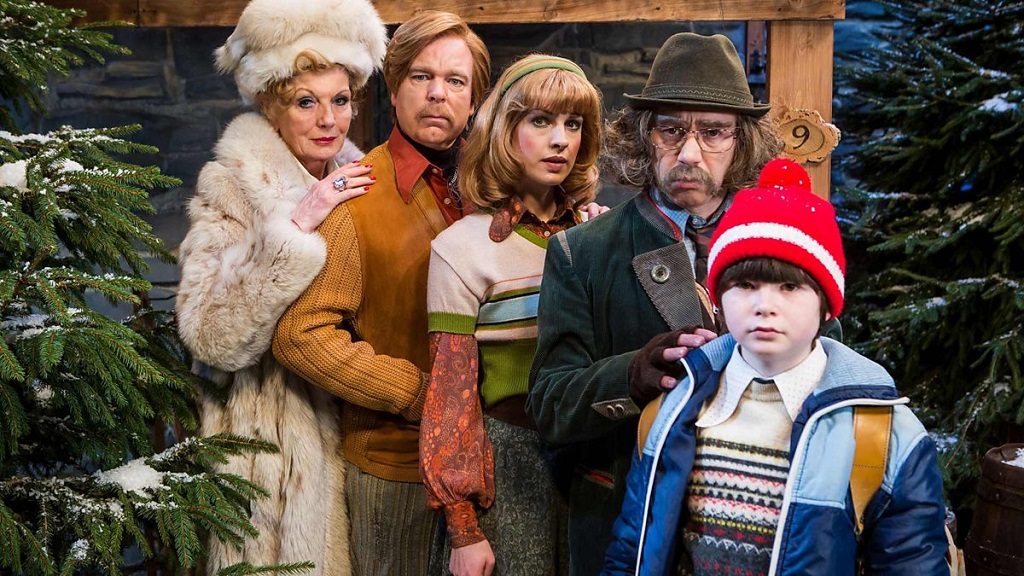
Shearsmith and Pemberton have a gift for utilizing the Christmas period and bringing out its inherent creepiness (see “The League of Gentlemen Christmas Special”, which shares a lot of its DNA with Inside No. 9) and melancholy (see the following entry). “The Devil of Christmas” is one of a few episodes that plays with the format of the show. This episode is presented as if we are watching a Christmas episode of a 1970s horror anthology, with all the awkwardness, stilted dialogue, and shoddy accents that come along with that. Think Garth Marenghi’s Darkplace, but at Christmas.
At the same time, the episode’s director (voiced by Derek Jacobi) talks us through the making of the film in an audio commentary. And it’s played reasonably straight, as the director explains the shortcomings and difficulties faced with making something like this. But it takes a turn, as we learn that we weren’t watching the kind of film that we thought.
Like much of Inside No. 9, the episode is a loving homage to a specific era and a certain kind of film. And each element, from the wigs and mustaches to the sets and lighting, is pitch perfect in “The Devil of Christmas”. Alongside this, we get glimpses of the behind-the-scenes, as the actors prepare for scenes and people mill around the set. These details all combine to put you on the back foot, so you forget what you’re watching and don’t think about the inevitable twist. This means that when the twist does come in the final minutes, it hits hard and is genuinely difficult to watch.
5. The 12 Days of Christine
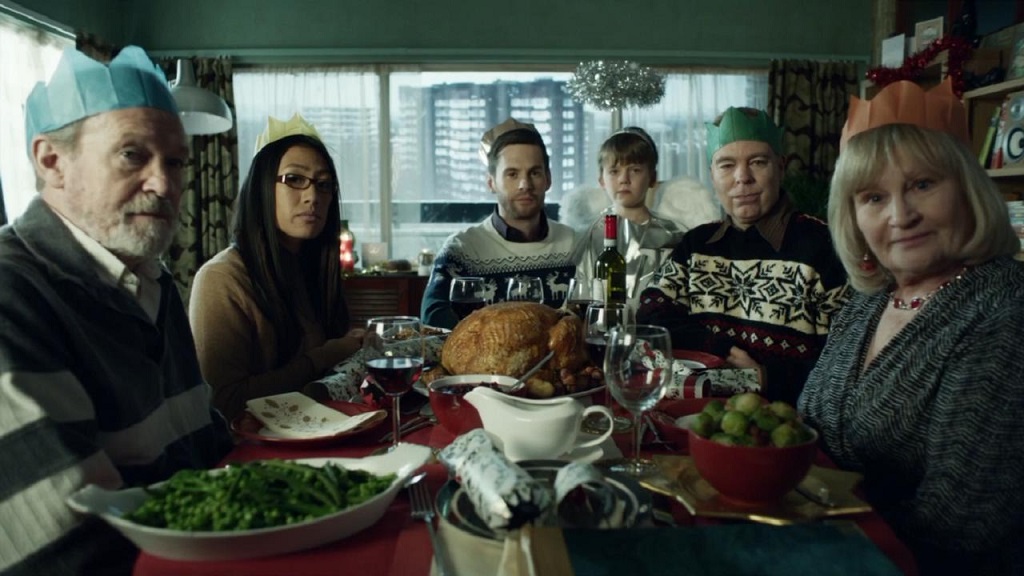
The final Christmas episode in the list, “The 12 Days of Christine” was bound to make an appearance. Critically acclaimed and currently sitting as the top-rated episode of the show on IMDB, this twisty tale really feels like it could exist as a film on its own. Thanks to an incredible central performance from Sheridan Smith, “The 12 Days of Christine” is perhaps the series’ most poignant half-hour.
Marking perhaps the show’s first departure from black comedy, “The 12 Days of Christine” follows the titular character through key moments in her life. Starting with when she met her partner, through big events like Mother’s Day, milestone birthdays, pregnancy, etc. All of these take place in the same London flat as Christine goes from carefree twenty-something to motherhood, on to divorcee.
The ‘twist’ to this tale is ultimately heartbreaking, but there’s plenty of misdirection before arriving there. Who is the strange man who keeps appearing to Christine? What is causing the strange occurrences in this tiny London flat? These red herrings allude to something altogether more traditionally supernatural when the reality is a lot more touching. It might not be the most upbeat Christmas episode ever, but it’ll leave you with a tear in your eye.
4. Mr King
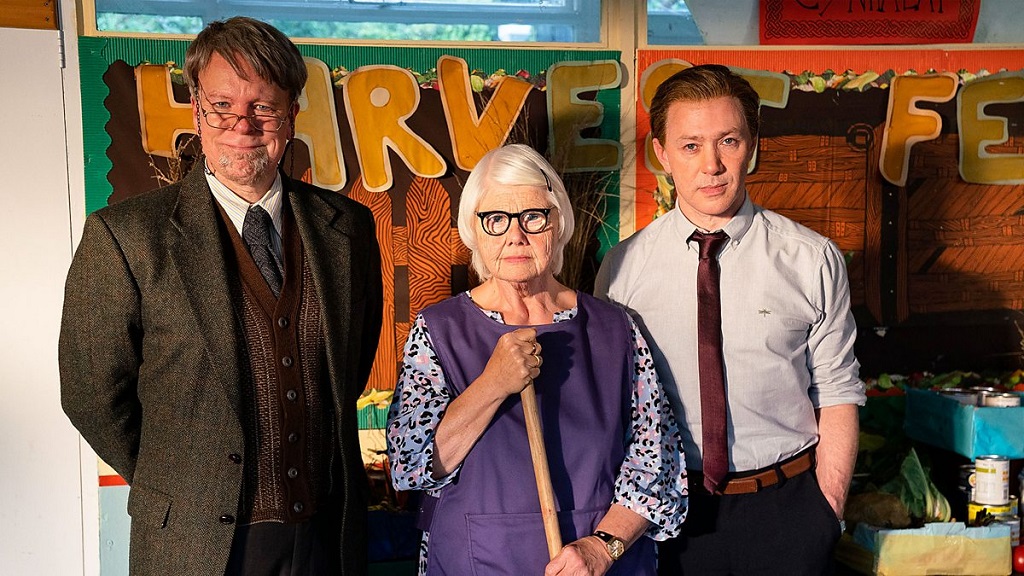
One of the most longstanding forms of horror in British cinema is folk horror, which makes it all the more surprising that Inside No. 9 didn’t give us a fully-fledged folk horror tale until its seventh series. Another mainstay of horror in general (but we Brits do it best) is creepy kids. And “Mr King” has both.
Reece Shearsmith takes center stage as the new teacher Mr Curtis, who arrives at an insular Welsh school after a seemingly stressful stint in the city. Steve Pemberton initially seems to be playing a broad, bumbling character. But that’s not entirely true. And initially, it’s unclear who or what the threat is. The school is odd, but it also seems to fit the mold of lots of remote, local communities (it wouldn’t be entirely out of place in Royston Vasey). Mr Curtis, on the other hand, is highly strung and possibly violent, prone to outbursts of anger and annoyance at the children. But as the episode progresses, he becomes aware that things are definitely not right at the school, and it seems to be more than just their strange country ways.
It’s in the final act of horror that things fall into place. The bumbling staff reveal their true faces. The cute kids are anything but. The final ten minutes of this episode are uncomfortable to watch while remaining extremely darkly comic. As the Corn King is crowned, you’ll not be able to look away.
3. The Stakeout
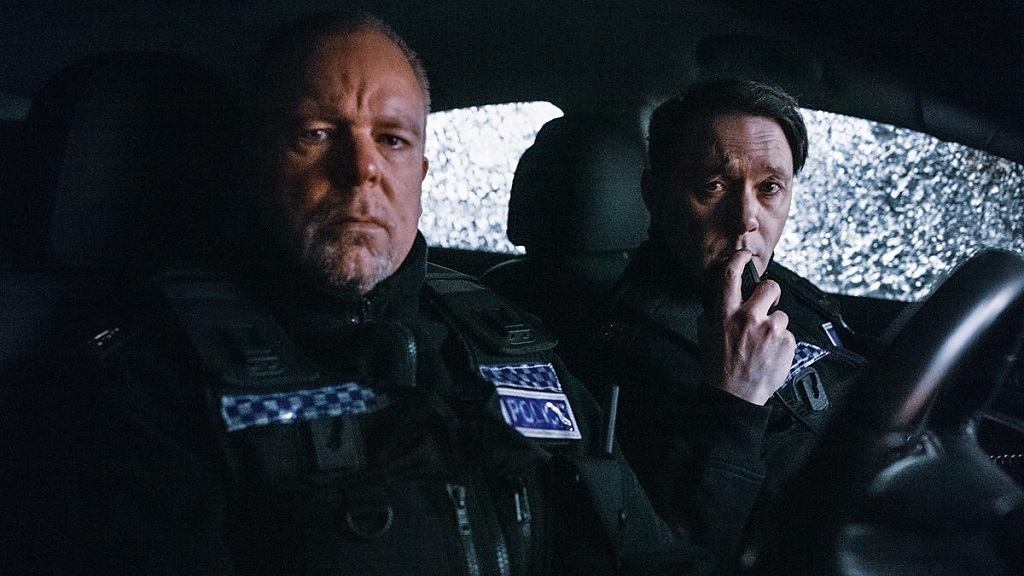
In my opinion, the best episodes of Inside No. 9 combine two disparate genres. It knows the tropes and it has fun with them. And nothing does this better than “The Stakeout”. Part cop drama—with a grizzled veteran officer and eager rookie—and horror, this is a wild one. Almost entirely dialogue-led, “The Stakeout” follows two coppers on just that, a stakeout. Your first clue that something strange is afoot is the fact that this stakeout is centered entirely in a graveyard.
As with other episodes, clues hinting at the twist are all there to be discovered (which makes you wonder how you missed them the first time around). But the fun is in guessing and trying to figure out what is going to happen. You might have a rough idea of how it’s going to go, and the title is a sly nod, but you’ll be thoroughly impressed at the sleight of hand regardless.
The crazy mix of genres almost makes this the quintessential episode of Inside No. 9 at least in terms of its horror-focused tales. It’s also a perfect demonstration of just how much Pemberton and Shearsmith can pack into a 30-minute episode. Where other shows have barely begun, Inside No. 9 has already pulled the rug out from under you.
2. Cold Comfort
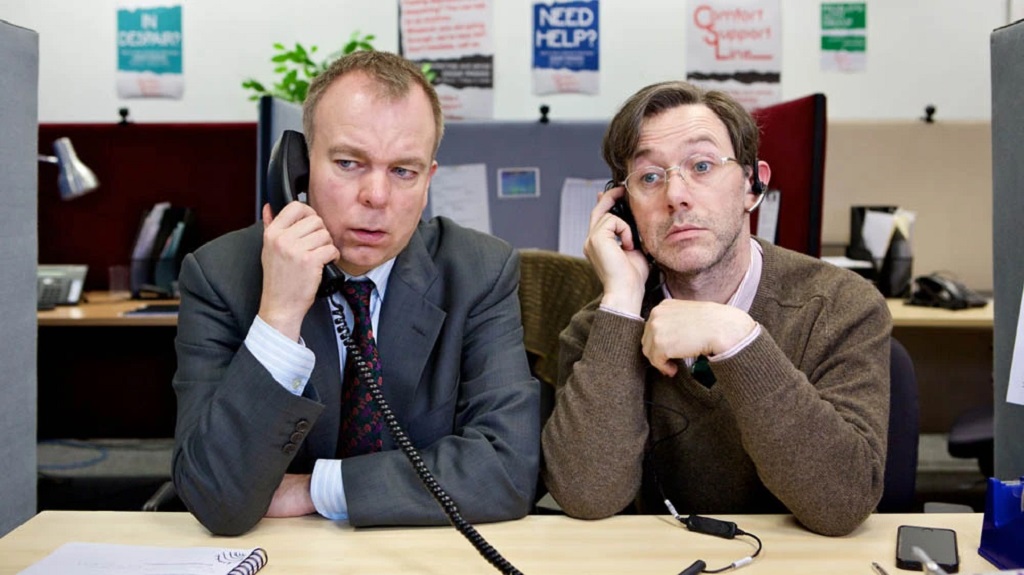
Featuring the best-ever use of ‘Shine’ by Take That, “Cold Comfort” is an experimental episode that aired as part of the show’s second series. It remains perhaps the show’s most experimental episode, filmed entirely through static CCTV cameras. It makes for an incredibly interesting half-hour.
Set in the offices of a crisis hotline, Pemberton plays Andy, a new volunteer. We follow him as he learns the ropes, getting to grips with the process. He soon takes a particularly difficult call, from a suicidal teenager, seemingly resulting in her death on the other end of the line. But of course, things are not that simple. What follows is a horrible line of falling dominos, as things go from bad to worse for Andy. The highlight is Pemberton’s rendition of ‘Shine’ by Take That which is poignant while being comically uncomfortable.
Because of the format, there are far fewer cuts in “Cold Comfort” than a normal episode, which only compounds the tension. There’s something inherently creepy about a CCTV feed, especially when it’s of an empty room or corridor. And Shearsmith and Pemberton (on directorial duties here too) make the most of this format. Like “The Harrowing”, this episode ends with a sudden twist that will leave you laughing, but with that trademark uneasy feeling that the show creates so well.
1. Bernie Clifton’s Dressing Room
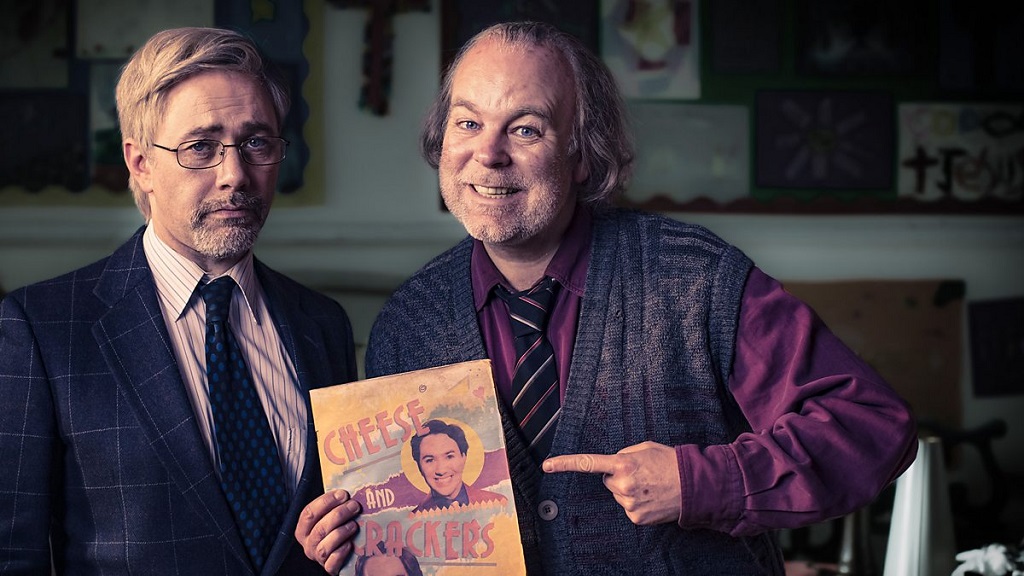
Tommy Drake are Len Shelby are Cheese and Crackers, or at least, they used to be. The pair are the now-defunct double act of the sort you used to see in working men’s clubs up and down the North of England. They even had some television success, but that’s all behind them now. Tommy has moved on, whereas Len is holding onto past glories. And now they’re back together for one last show at a church hall.
The pair spend a good portion of the runtime arguing about their old act and what led to its demise. They remember it differently. Tommy claims that, even in their heyday, they weren’t particularly good. For Len, that wasn’t the case. The episode namedrops a lot of the variety acts of the last forty years and it gets you thinking that maybe these acts just weren’t very good. They certainly couldn’t keep up with the changing times, their acts outdated and racist. Some moved on, others struggled. Len is the latter and he was left behind, falling into alcoholism and homelessness. As Les McQueen of of Crème Brûlée says of showbiz: “It’s a shit business.”
Obviously, this is Inside No. 9 so there’s a twist. And it’s a kicker, turning this hilarious half-hour into something extremely bittersweet. Maybe it’s because I’ve grown up with these sorts of acts (thanks to parents of the sixties and seventies) and gone from hating this broad kind of comedy to having a semi-ironic appreciation for it. Or maybe it’s just the North England church hall awakening countless childhood memories. But “Bernie Clifton’s Dressing Room” is an incredible half-hour of television. The final moments are the greatest Pemberton and Shearsmith have ever written.
Jack Bumby


 MyCreativeRamblings